

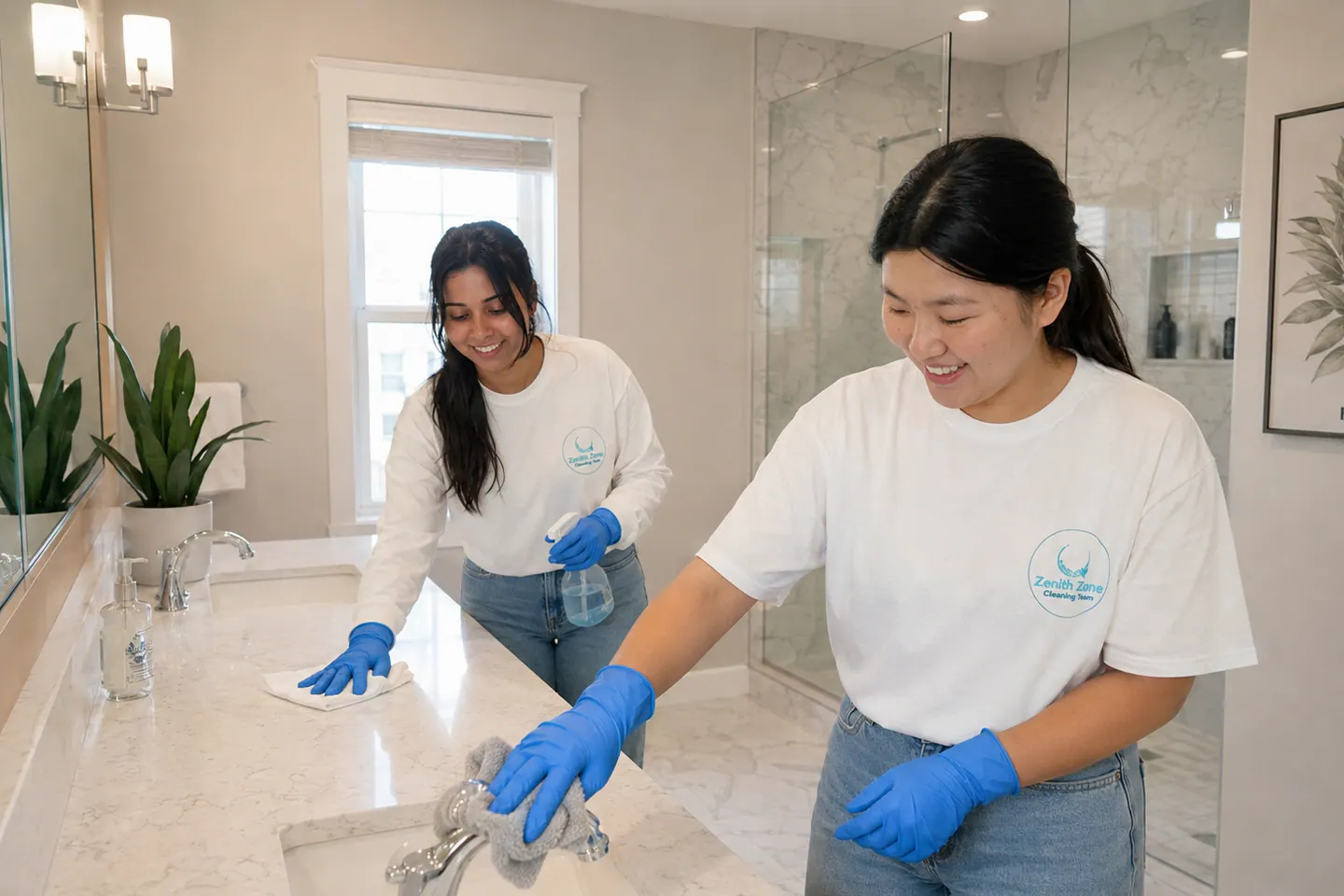
A professional house cleaning normally covers the kitchen, bathrooms, accessible dusting, touchpoints, vacuuming and compatible hard-floor mopping. The exact result depends on the service selected, the home’s starting condition, safe access and the person-hours approved.
This guide separates the core work from deeper or optional tasks so you can compare services without assuming that every cleaning company—or every appointment—uses the same unlimited checklist.
The core areas in a professional house cleaning
A standard first-time or recurring visit focuses on the surfaces and rooms used most often. Zenith confirms priorities during the walkthrough, then works through the approved scope in an efficient order.
- Kitchen counters, backsplash, sink, faucet and compatible appliance exteriors.
- Bathroom toilets, sinks, tubs or showers, mirrors and accessible fixtures.
- Accessible dusting of furniture, ledges, sills and ordinary horizontal surfaces.
- Doors, handles, switches and other confirmed high-touch areas.
- Vacuuming of accessible carpet, rugs, edges and compatible upholstered surfaces when included.
- Vacuuming and mopping of compatible hard floors.
- Ordinary cobweb removal and a final visual check of completed areas.
How the scope changes by cleaning type
- First-time or one-time cleaning creates a practical baseline and usually needs more labour than later maintenance visits.
- Recurring cleaning protects an established baseline with weekly, biweekly or monthly priorities.
- Deep cleaning adds time for accumulated grease, soap scum, mineral buildup, tracks, detailed baseboards and other neglected areas.
- Move-in and move-out cleaning is designed for substantially empty spaces and can include empty storage and appliance interiors when confirmed.
- Post-renovation cleaning focuses on fine construction dust and requires completed, safe trade work before the cleaning begins.
Tasks that need to be selected or confirmed
Some work requires the customer to empty an area, disclose a material or approve additional labour. It should never be assumed from the phrase ‘house cleaning’ alone.
- Inside ovens, refrigerators and other compatible appliances.
- Inside empty cabinets, drawers, closets and vanities.
- Interior windows, detailed tracks and safely accessible glass.
- Behind or underneath movable appliances and furniture when access is safe.
- Heavy grease, mineral buildup, extensive pet hair or long-neglected detail work.
- Carpet and upholstery hot-water extraction, which uses separate equipment and pricing.
- Laundry, linen changes, organizing or restocking when offered and arranged in advance.
Work professional house cleaners may decline
Clear safety limits protect the customer, the property and the cleaning team. A responsible company should explain these limits before work starts.
- Biohazards, sharps, hazardous chemicals or unknown dangerous substances.
- Active pest infestations, unsafe structures or blocked emergency exits.
- Construction debris and large-volume hauling.
- High-access ladder work or lifting very heavy furniture.
- Materials that cannot be identified or safely treated with the available process.
- Work expected to reverse permanent staining, wear, etching, damaged grout or finish loss.
How person-hours affect what gets completed
Zenith prices residential cleaning by the person-hour. Two cleaners working for 1.5 clock hours equals three person-hours. A larger team may shorten the time at the property without changing the total labour used.
When a home needs more work than the approved time allows, the team follows the confirmed priorities. This is why an honest condition description and a short must-finish list produce a more useful estimate than choosing the smallest possible range.
What to confirm before the appointment
- The cleaning type and the two or three results that matter most.
- Rooms, storage interiors, appliances or windows that are inside the scope.
- Pet hair, buildup, delicate finishes, existing damage and product sensitivities.
- Parking, elevators, keys, alarm codes and other access instructions.
- What should happen if the approved person-hours are reached before lower-priority work is complete.
- How service concerns should be reported after the appointment.